
An Introduction to Roots
What are roots?
We usually refer to any part of a plant that grows underground as a root. Tree roots are often referred to as thick woody objects something like an underground branch. This is only partially correct since it ignores the parts essential for uptake of water and nutrients.
Roots have four main functions support, absorption, storage and transport (of carbohydrates down and water and minerals up). Roots are often divided into two basic types based on their separate functions and structure. These are woody and non-woody or absorbing roots.
Woody Roots.
A woody root is any root that has started to develop wood. This change in the cellular structure also results in a change in the colour of the root as the bark starts to develop and thicken. Since bark is reasonably waterproof (think about a cork which is made from oak bark) these roots are generally inefficient at absorbing but perform all the other functions. Roots can start to become woody within a few weeks.

Absorbing Roots
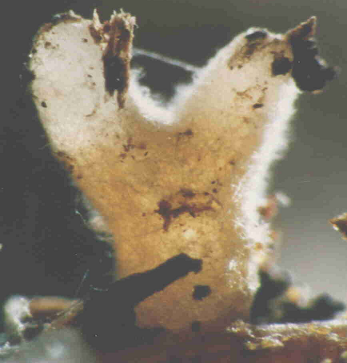
Root hairs and mycorrhyzae are the two root organs responsible for absorption. Root hairs are single cells on the outside surface of the root that extend into the soil, some times several millimeters, sometimes less than 0.1mm in length. Because these are very small fine structures they are easily damaged, and are seldom visible to the naked eye. These usually live for several weeks to a few months. Mycorrhyzae are a symbiotic (mutually beneficial) relationship between the root and a fungus. Nearly all trees have mycorrhyzal associations and in most cases the association is essential to the healthy growth of the tree. This association starts when the fungus inoculates a young absorbing root. This root / fungus combination is more efficient at absorbing many of the essential elements. Mycorrhyzal roots often last a year or more and are more resistant to drought stress.
Aggressive Roots
The use of emotions such as this is inappropriate when discussing roots or any plant part. Roots are opportunistic. They do not have sensing organs (ears, eyes etc.) and do not “go searching for water”.
When conditions are right roots grow rapidly. For optimum growth roots require the right mix of water, nutrients and oxygen and temperature. Areas such as broken pipes or the moist area just under a pathway can be ideal.
As roots grow in thickness they exert a force on the surrounding surfaces often damaging lighter structures such as paths and driveways. Roots always enter pipes through existing cracks or faults, which are usually not caused by the roots. Roots almost never lift houses.
Text and photograph by Mark Hartley. © 2002 The Australian College of Arboriculture Pty Ltd