
Culturally modified trees – dispelling the myths
Abstract
A culturally modified tree (scarred tree) provides a vital link between the original owners, their
land, and past cultural practices. Arboriculture plays an important role in the process of
identifying culturally modified trees. Working with Indigenous communities, archaeologists,
ecologists, and landowners, arborists provide much of the scientific knowledge required to
make an informed determination.
On occasions, those assessing potential scarred trees, including arborists, have tended to rely
primarily on the morphology of the scar in reaching their findings. They gloss over evidence
that can be used to make a more informed assessment, often resulting in a dubious conclusion.
While the loss of a culturally modified tree due to carelessness is unacceptable, the
classification of a tree that has not been culturally modified as a scarred tree is similarly
undesirable.
Several approaches can increase confidence in the determination and eliminate false positives.
Following the approach outlined will assist arborists in assessing trees that may have been
culturally modified. Several common mistakes are also discussed.
Background
Trees were used by the traditional landowners in numerous ways making various artefacts and
shelter. Tree parts were used for music, making weapons, building canoes, shelter and making
containers for carrying various items such as food and babies. In addition, trees were sometimes
marked for ceremonial purposes and sometimes modified and used as markers. On occasions,
toe holds were cut to allow for access, usually for food.
All trees that have been culturally modified are important. However, to avoid confusion, it is
necessary to divide culturally modified trees into two categories.
- The first of these is the Modern Culturally Modified Trees (MCMT). These trees have
been modified since the displacement of a community using traditional methods or
modified methods as a part of cultural activity. - The second group is the Traditional Culturally Modified Trees (Traditional Scar Trees
or TCMT). These trees were scarred before the displacement of the endemic community
and were scarred as a part of the normal cultural practices of the community. These
trees are particularly significant because of the link between these trees and the
traditional owners of the land.
This paper suggests that there are four critical requirements that need to be met for a tree to
be a TCMT. The four critical components are:
- Handmade – The scar must arise from the use of basic cutting and carving tools, and
- Tree age and size – The tree must have been present and big enough to have been scarred
by the traditional custodians before they were displaced, and - The age of the scar – The scar must have been made at the time the land was last used
by the traditional owners, and - The shape of the scar – The wound must be of a shape and form consistent with some
form of cultural use or practice.
It stands to reason that all the above requirements must be satisfied. If any of these four
requirements is not satisfied, the tree cannot be a TCMT. As a result, the order is not important
when assessing a scar tree.
1. It must be hand made
An experienced consulting arborist should be able to assess the origin of the scar. They need a
sound knowledge of the cause of injuries to a tree and how a tree responds to injuries. Sadly,
however, this is not always the case. The shape of the wound is often the first thing that is
considered, and this, as we will see, tends to bias the arborist’s assessment.
Many things can wound the trunk of a tree. Most of the wounds we see in and around urban
areas result from mechanical damage, root damage, fire damage, insect activity, cankers and
grazing. We need to understand how these are similar and how they differ. Equally as
importantly, we need to know how to communicate this information to the various
stakeholders.
Mechanical
Mechanical damage affects a tree when some form of impact with the tree results in the phloem
/cambium region being killed or a portion of the bark being dislodged. This often involves a
reasonable amount of force, but this is not always the case. Arborists have often seen the bark
dislodged when they have run their rope through a fork or when they have dropped or failed to
control a branch or chunk of wood that they were removing from a tree, and it hits the trunk or
a branch below.
Depending on timing, the bark can be easily separated from the xylem. This is particularly true
during periods of active growth.
Of course, modern machinery (vehicles, excavation equipment and the like) can dislodge the
bark. There can sometimes be tell-tale signs left on the tree, such as damage to the underlying
xylem or separation of the retained bark from the stem. On occasions, the bark will be pulled
outward from the trunk of the tree as the equipment passes. In addition, if there had been a
reasonable impact, the xylem beneath may also have been damaged.
Mechanical impact can also arise from natural causes. The shock wave of a lightning strike,
being hit by a falling tree or tree part or even being hit by debris in a flood can result in
mechanical damage.
The one thing that is lacking in mechanical damage is evidence of the margins of the scar
having been cut. Unfortunately, in most cases, the margins of a scar are covered by
woundwood1 and are not apparent. As a result, what is important is not that the arborist
confirms that the wound has been handmade but that he has not missed any indicators that may
suggest or confirm that the “scar” was caused by mechanical impact.
There may be hints as to how the scar arose. It is essential that these are considered and, where
possible, eliminated.
Root damage and fire damage
These two causes of scars have been linked together because they usually result in a similar
wound – an inverted “v”. This is important because there is little if anything to support the use
of a triangular shaped artefact by traditional owners.
The death of, or damage to, a first-order root close to the trunk may often result in localised
death of the adjacent trunk tissue. This will usually result in a wound wider at the base and
looks somewhat like an inverted “v”.
Fire damage can also produce the same inverted “v” shape. Fire damage, however, has some
additional indicia. The most obvious is the evidence of burnt wood, but not all fire damage
results in the wood being burnt. Where the fire has been hot enough to kill the phloem but not
burn through the bark, the damage can appear similar to root damage. As a result, the arborist
needs to consider other trees adjacent to the potential scar tree. They need to ask questions such
as “Are there numerous trees with damage on the same side?” and “Are their trees nearby that
have fire damage?”
Insect activity
Phloephagous borers such as the Tiger Longicorn (Phoracantha semipunctata) feed primarily
on the sugar-rich phloem and can cause localised wounds. In the process of feeding, they often
eat some of the immediate adjacent xylem leaving tell-tale traces on the surface of the xylem.
In addition, many of these insects tunnel into the xylem to pupate, although sometimes they
can die or be eaten by birds and other insects before they get a chance to pupate.
The presence of large (more than 6 mm in diameter) round, oval, or “D” shaped holes in the
xylem or borer tracks on the wound’s surface eliminates the tree being TCMT. The bark must
be in place for these borers to survive, and their activity causes the death of the bark and renders
the bark useless.
Cankers
Strictly speaking, a canker is an area of dead bark or the area left by the death of the bark. In
many cases, it is caused by a fungus, but other causes such as extreme cold and radiation
damage (so-called sunburn) can also kill the bark. Once injured, the tree will start to occlude2
the damage. Where there is a fungus that acts as a “perennial canker”, the margins of the
woundwood are repeatedly killed, often creating a bullseye effect.
In most cases, the cause of the canker is not apparent, particularly years after the damage has
occurred. However, the pattern of damage caused by perennial cankers can remain apparent
for decades and should not be confused with cultural dendroglyphs.
1 Woundwood is normal anisotropic woody tissue that is formed along the margins of a wound. - This tissue may be stronger and more decay resistant.
2 The process of the tree forming new tissue that eventually covers over the wound
Animal damage
A number of animals can graze on or otherwise remove bark from a tree. This includes horses,
cows and goats, as well as less obvious culprits. Horned bulls can remove the bark of trees in
the process of honing their horns. Where possible, finding out how the land has been used in
the more recent past is useful.
In assessing a TCMT, it is preferable for the arborist to know when the area was last used by
its traditional owners, or at least some time frame for when the area was last used prior to the
displacement of the traditional owners. Even a broad range such as the last few decades of the
1800s or up to the 1930s is sufficient to commence the process. However, the lack of
information does not prevent an arborist from determining an age range for the tree and the
scar.
2. Tree age and size
Determining tree age is a difficult process, and for this reason, it is not usually the first item
that is assessed. In temperate areas, the age of many Australian natives can be determined by
looking for the latewood in thin (3 to 5 micron) samples or by examination under a scanning
electron microscope. This often requires some form of destructive testing, such as taking a core
sample or a transverse cross-section through a branch. (Under no circumstance should the open
scar or the underlying occluded tissue be damaged to take a sample without consent).
While microscopic examination may be suitable, there are problems with using this method.
The part tested may have a different rate of secondary thickening than the main stem. This
means that if the rate of the sample taken is applied to the tree, it will tend to overestimate the
age of the tree. This is not an issue if the overestimated age of the tree means it was not of a
suitable size after the displacement of the local community.
It is also important to keep in mind that the tree had to be large enough at the time of scarring
to yield the required product. It is fanciful to suggest that where the local community was
displaced 100 years ago, that a 120-year-old tree was used to make a canoe unless all the bark
was removed. A large canoe sized wound on a 120-year-old tree is not going to be a canoe tree,
and is unlikely to be a culturally modified tree.
Even if the sample is collected from the main stem or even the stem of an adjacent tree,
microscopic examination can still be problematic. We will discuss this in more detail when we
start to look at the age of the scar.
The final issue in extrapolating growth rates, is that it requires an assumption that the tree’s
growth rate is similar to the growth rate of the tree for its entire life. Things such as mechanical
damage to the tree, insects and fire damage, can significantly retard the growth rate, increasing
the error in the estimated age.
Where a small sample can be collected from the wound face, using radiocarbon dating may be
of some benefit in aging the wound. Again, there can be problems in relying on radiocarbon
dating, and we will raise these when we look at determining the scar.
3. Age of the scar
For a tree to be a TCMT, the scar needs to have been made before the time the community was
displaced. This means the tree needed to be older than that and already of the size that made it
suitable for the intended use.
It should go without saying, in general, that if the thickness of the woundwood is only relatively
thin, then the tree must be proportionately older. For example, 100 mm thickness of
woundwood on a tree with a 500 mm radius, would suggest that the tree is around five times
older than the scar, or that the scar is around a fifth of the age of the tree. If the tree is estimated
to be 120 years old, then this would suggest that the scar is less than 30 years old. Unless the
local community was never displaced, the tree could not be a TCMT.
Where the community has been displaced since the early part of the 1900s, a question that
needs to be considered is “Why has the wound not occluded?” In most instances, 100 years is
more than enough time to occlude even a large bark wound. This was why a number of the
dendroglyphs at Yuranigh’s grave have had the woundwood cut back on several occasions.
Without cutting back the woundwood, the wound faces would have occluded.
There are numerous examples of wound occlusion in recently injured trees, including modern
culturally modified trees (Spennemann 20153, Long 20054, Bliss 2020). These demonstrate that
the scar occludes quickly unless the tree is in poor health or stressed. These examples suggest
that a coolamon-sized wound (20 to 30 cm wide) can occlude in a few decades in most
circumstances.
The relatively rapid occlusion of wounds raises questions about many so-called culturally
modified trees. Wound closure in two or three decades means that most culturally modified
trees would have no apparent wound or, at best, would have a small seam in the bark.
There are some obvious exceptions where wounds would still exist. These would include:
- Trees with large wounds, particularly where the size of the wound would have had a
significant impact on the health of the tree, and - Trees that have extremely slow growth rates, such as those that are located in semi-arid
and arid regions, and - Trees that have gone through considerable stress and most likely died, and
- Trees where the wound has been reopened.
TCMTs with open wound faces are not likely to be present in living trees in most open
woodland areas where displacement occurred 100 or more years ago. The time frame is likely
to be shorter where the conditions are more conducive to growth,such as tropical and equatorial
coastal areas.
Determining the age of the scar
There are several approaches to determining or, more accurately, estimating the age of the tree,
the age of the scar and the rate of occlusion. As much as we might hope there is absolute
precision in this process, this is rarely the case. However, as is often the case with measurement,
precision is not as critical as reduced imprecision. For example, knowing the scar was 47 years
old would be fantastic but knowing that it is not older than 80 is more than sufficient to
eliminate it from being a Traditional Culturally Modified Tree.
Gut feeling estimates
Gut feelings are often used to estimate the age of a tree. People are generally appalling at
estimating tree age, and arborists are no exception. While a gut feeling may be helpful to start
3 Spennemann, D., 2015. The Disappearing Goanna. Twenty years of accelerated callus growth
obscuring the design of a carved tree, Mungabareena Reserve, Albury (NSW).
4 Long, A., 2005. Aboriginal scarred trees in New South Wales: a field manual.
the process, it also produces an immediate cognitive bias. Having formed an opinion about the
tree’s age, we tend to hold onto that opinion.
For example, the tree in the adjacent image is of a Flooded Gum (Eucalyptus grandis) growing
on a suburban street in Willoughby, NSW, in fairly average soils. The trunk had a DBH of just
over 1.4 metres. Knowing that the species was not endemic to the Sydney region, meant that
the tree was less than 200 years old. My first estimate was somewhere between 80 to 120
years old. However, the tree was not present in the 1943 aerial image, which meant that it had
to be less than 76 years old. A fair estimate may have been 60 to 75 years old. As a result, many
may be surprised to learn that the image was taken when the tree was 38 years old.

Tree rings
Tree rings are often counted to determine the age of a tree. This works well with deciduous
species but is significantly more difficult when working with evergreen trees in cool temperate
environments. For example, an Angophora growing in the Penrith region of Sydney may only
produce a couple of latewood cells5. As is typical of latewood, the lumen is more flattened, and
the cell walls are thicker. Still, the limited number of latewood cells makes them difficult to
observe and requires high-quality material preparation to enable examination.
It is a commonplace practice to use an increment borer to obtain a core to allow for the
preparation of thin sections. However, the hardness of many Eucalypts can make this almost
impossible and comes at a risk of breaking the increment borer. Cutting a transverse section
and polishing the sample is the easier method, but the rings are often less apparent than they
are in a thin section and the use of transmitted light and cutting down the whole tree is often
not an option. An alternate option is to take a branch and prepare samples from the branch for
examination and then extrapolate the results.
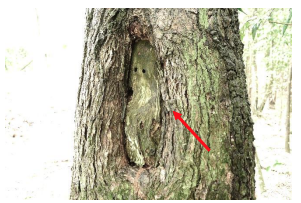
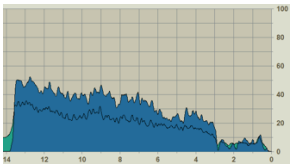
plus or minus 10 years. Even if there is a 100% error
this living tree cannot be a TCMT
A Resistograph can also be used to plot growth increments. This works because the thickening
cell walls later in the season and the thicker walls of the latewood contrast against the resistance
of the earlywood. While it is impossible to verify or determine if false rings are present and
affecting the result, it still reduces uncertainty.
5 Based on the examination of a microscopic slide prepared by microscopist Ernie Ives.
Comparative growth rates
There are several ways to obtain information on growth rates. Taking measurements over
several years is ideal, but this is often not possible. As has already been pointed out, growth
rings from a branch or other part of the tree can be obtained, and these can be used to determine
an average growth rate. In this instance, it is essential to remember that the lower parts of a tree
often lay down more secondary growth than the higher parts of the tree. Again, this is not a
problem if the process is used to set a maximum age.
An upper range of the comparative growth rates can also be determined using images. This is
done by finding earlier images of the tree or finding trees of a similar size in historical images
and determining the growth rate over that time frame.
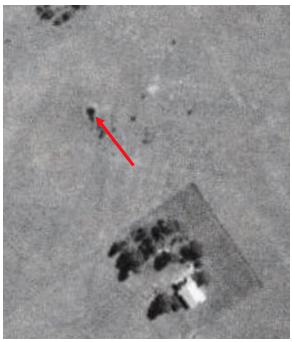
As an example, a tree in Parramatta Park has been identified as a TCMT. There are aerial
images of the site in 1943, and there are trees in this area, but it is not clear if this tree is present
or how big it may be. The tree has two scars; one on the northern side and one on the southern
side. The tree has a DBH of 118 cm. The diameter of the stem at the time of scarring is
estimated to be approximately 65 cm.
An arborist report from 2012 assessing the tree identified it as a scar tree. At that time, the
DBH is reported to be “1050 mm.” (This means that in 9 years, the DBH has increased by 13
cm or about 1.5 cm a year.) The report suggests the scarring occurred about 200 – 250 years
ago, suggesting that the tree is over 400 years old.
Despite the tree not being obvious in the 1943 aerial image, the 1943 aerial images can still
help us determine a comparative growth rate for this tree. Fortunately, Eucalyptus tereticornis
is a relatively common species in the Sydney region. All that is needed is several reference
trees of a similar size to see if they are present in the 1943 images. If they are present, we need
to guestimate how old they are in the image.
As it turns out, there is a considerable number of such trees, including a tree about 100 metres
to the southwest of the scar tree. There are also a few trees in Regentville that are useful for
this purpose. All these trees have a DBH of over 100 cm.
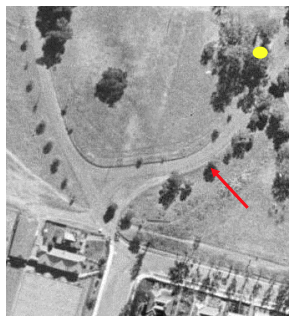
(arrow) and the location of the “scar tree” (circle).
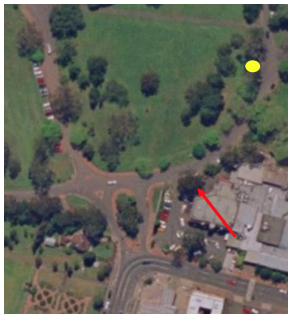
The reference tree in Parramatta Park was a small tree in 1943. In 2021 it had a DBH of 117
cm. This is almost identical to the DBH of the scar tree. Based on the small size of the canopy
in the 1943 image, it seems unlikely that this tree predates 1900. In turn this means that the
scar tree is unlikely to predate 1900.
Regentville is further west of Parramatta but is similar to Parramatta Park’s climate, soil and
topography. Several Forest Redgums are growing there that were not present in 1943, and one
that was a very small tree in 1943. The tree at 56 Loftus Street has a trunk diameter of 109 cm
in 2022. Based on its small size in the 1943 image, this tree is not likely to be 100 years old.
Another tree beside the driveway of 28 Martin Street has a DBH of 107 cm in 2022, and was
not present in the 1943 aerial image. This tree has DBH 1 cm larger than the scar tree had in 2012.
Again, these two trees suggest that the scar tree at Parramatta is likely to be less than 120
years old.

Based on the above information, it would be hard to argue that the growth rate of the DBH for
this species is less than 1 cm a year, and it is probably reasonable to assume that it could be
closer to 1.5 cm a year in Parramatta Park. This means the wounds on the ‘scar tree’ are likely
to have occurred sometime mid the last century and not pre 1800 as has been suggested.
Radiocarbon dating
This is by far the most involved and expensive method for dating the age of a scar. Regrettably,
it also has some significant limitations. The burning of fossil fuels and timber and the aboveground
discharge of nuclear devices impact what would otherwise be a quite precise
technique6
.
Again, the Parramatta Park scar tree was tested using radiocarbon dating to illustrate the issues
associated with this technique. The results were that there was a 95% likelihood that the scar
was made between one of two dates – 78% being post-1950 and 16% between 1693 and 1727.
The latter date seems unbelievable in this situation, while the post-1950 date seems consistent
with the above estimation of growth rates.
6 Bowman, S 1990 Radiocarbon Dating (Interpreting the Past), London: British Museum Press
There is, however, a lower likelihood that the scar could have arisen between four other date
ranges7. Again, aided by the information on growth rates, it is possible to eliminate all these
dates. We can have a fair degree of confidence that the scar tree in Parramatta Park is not a
TCMT and that it is almost certainly wounding that occurred in the 1950s.
The take-home message on radiocarbon dating is that it is quite reliable for dating samples
from 1965 onwards. While it does reduce the uncertainty about the ages of wounds formed
before that date, it requires additional information to assist in that process. This additional
information is required to address problems arising from the contamination of atmospheric
carbon dioxide.
- The shape and size of the scar
We are considering the shape of the scar last because the shape is the most unreliable way of
determining if a tree is a scar tree. If any of the first three requirements are not met, then the
shape and size of the scar are irrelevant unless the scarring is a modern cultural modification.
There are thousands of scars on trees that have the shape and size of a shield or a coolamon,
resulting from many factors other than traditional cultural modification.
It may help the reader understand, that the alignment of the vascular tissue and how the
cambium divides influence the shape of a wound. After wounding, undifferentiated tissue
(callus) is formed on the margins of the wound by the living cells (mostly parenchyma). The
callus is only a few millimetres thick at most and does not contain any of the primary transport
cells (vascular tissue, axial parenchyma) ordinarily present in wood.
The cells along the outer edge of the callus form a new layer of cambium and phloem, and this
starts the formation of woundwood. Woundwood has normal transport cells. The most critical
transport system is the vascular system, responsible for transporting water using specialised
cells or stacks of cells (tracheids, fibre-tracheids, and vessels.) These structures are dead when
they start to transport and have to mesh with the surrounding vascular system at formation.
This means to work, water-conducting cells must align and interconnect with each other
The cambium forms all the vascular tissue formed after wounding. The cambium is a layer that
is only a few cells thick that produces new bark on the outside and new wood on the inside.
Cambium is only capable of dividing in two directions: anticlinal division and periclinal
division.
Anticlinal division produces more cambium cells so the tube of cambium can get larger.
Periclinal division results in new xylem on the inside and phloem on the outside. Cambium
cannot divide axially (in the direction of water transport). This means that wounds usually close
from the sides. The exception to this is when the vascular tissue is realigned to be more parallel
with the top or bottom of a wound. However, this increases the length of transport, and
occlusion from the top or bottom of the wound is nonetheless slower than from the sides.
In summary, the shield, canoe, or coolamon shaped scar may be little more than the result of
the tree’s natural process of occlusion. In contrast, if the shape and size of the wound are
inconsistent with traditional use, then eliminating the tree as a traditional culturally modified
tree is probably appropriate. Wounds that appear inconsistent with cultural use include
oversized wounds and wounds that are not aligned with the grain.
7 31.9% of the date being between 1879 to 1926,
16.6% of the date being between 1812 to 1836,
10.3% of the date being between 1850 to 1866, and
9.4% of the date being between 1705 to 1720. - Other considerations
Consideration needs to be given to the location of the tree. There is nothing intelligent about
suggesting that a tree is a canoe tree when the tree is many kilometres from a water source.
Likewise, suggesting that the bark has been stripped for shelter seems to be a stretch when
caves or rock overhangs are nearby.
The reader should also keep in mind that working at ground level is a lot easier than working
aloft. There needs to be a good reason for the artifact to be made with a part that required
working at heights. For example, what about the shape or morphology of the tree or the part
being extracted resulted in the extra effort of climbing the tree? If you can’t answer that
question, then it is likely not a scar tree.
In the same vein, fallen trees and tree parts also provided a source of wood and bark. The
question must be asked for something durable such as a parrying shield, “Why would a standing
tree be used when fallen material would have been available and much easier to use?” Given
that the parrying shield could last for decades, suddenly needing to extricate one from a
standing tree seems unexpected.
Bark is not an ideal material for many artifacts. Wood is much stronger and can be carved more
precisely. For this reason, broad shields and coolamon were frequently wooden. Bark and
sometimes wood (mostly in tropical areas), were used for canoes. The majority of bark canoes
involved the removal of all the bark from around the trunk and then tying the ends together
(Nawi style)8. Yuki or shield-shaped canoes were used by the Wiradjuri, Waddi Waddi and
Ngarrindjeri people and were likely used by other nations along the Murrumbidgee – Murry
Darling River system. Before you declare a tree to be a canoe tree, you should see if you can
find any evidence relating to the sort of canoes used by the local people.
Conclusion
The shape of a wound is a poor indicator that a tree is a TCMT. Some precision may be added
by including size and location, but ultimately a TCMT must have been scarred before the
community were dispossessed of their land. Furthermore, this means that the tree had to be of
sufficient size to be used in the first instance, and this requires the tree to predate the
displacement to have been big enough to use. This means that some work needs to be
undertaken to reduce the uncertainty about the age of the wound and the tree.
Age is a critical component of a TCMT, but age alone is not sufficient. Old naturally occurring
scars are commonplace. The shape of the scar must be consistent with an artifact or cultural
use. In some instances, even the location of the site in relation to other geographical features
can be crucial. Likewise, understanding the cultural practice of the local community can be
important in understanding how trees were and were not used, and, in turn, this may impact the
findings.